Recently, I watched a documentary about Minimalism. The documentary mainly focuses on few minimalists, and their journey from a consumer-driven lifestyle to a more fulfilling life as minimalists. If you’ve ever shifted houses, you would have probably confessed to yourself or your family that you have way too much stuff! That’s why most of us throw some stuff away or leave it behind while shifting to a new place. But still there are many things in our homes today, that we don’t actually need. The situation might be worse in America. That’s why minimalism became a trend and is getting picked up fast these days as a way of escaping the hustle.
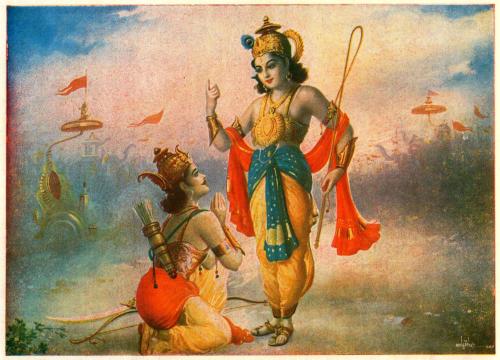
While I was watching the documentary, I suddenly realized that minimalism could have its roots here, in India! It wasn’t called minimalism of course. But the idea behind minimalism and the core principles behind it certainly originated here, specifically in one of the most sacred texts in Hindu Philosophy, The Bhagavad Gita! We’ve heard that The Bhagavad Gita has solutions to all problems in life. This time, I have a solid case to prove this point!
At the core of minimalism is the renunciation of consumerism-driven frenzy of buying things! But why do we buy things? Why do we buy anything at all? The answer is freedom of choice. Few decades ago, you couldn’t just buy whatever you wanted. You had to visit a tailor if you needed a new shirt. You had to request your village blacksmith if you needed a new utensil made. Everything was made to order! And there was no money. Except a handful of people like the landlords and kings everyone else was poor. So people had to be content with whatever they could afford. With the industrial revolution an era began where people had the choice to buy whatever they wanted! It was definitely not what they needed. But the freedom of choice made them feel good. They felt like the kings and landlords for whom their forefathers had toiled and received alms in return. This false perception was nurtured for generations and became an inevitable part of our lives!
Buying became a feeling. It became an emotion. Nowadays we buy anything because of the way that thing makes us feel. We buy a car because of the freedom it gives us of going anywhere we want at any time we want! We buy a yoga mat thinking about the peaceful yoga sessions we’ll have. We buy fresh fruits or leafy greens so that we feel less guilty when we eat a pizza loaded with extra cheese! We buy a dining table thinking about the parties we’ll host somewhere in future where we’ll decorate all cuisines on that table and take pictures sitting around it. We are simply finding external sources of emotional stimuli! But how long will these stimuli last? To counter this mechanism is to cut the source of it all! Krishna suggests that one should be content within himself/herself and not by the things he/she owns or does!
प्रजहाति यदा कामान् सर्वान् पार्थ मनोगतान्।
आत्मन्येवात्मना तुष्टः स्थितप्रज्ञस्तदोच्यते।।२.५५।।
Meaning : When a person gives up all material desires of the mind and is content by the self and in the self alone, then his wisdom becomes steady.
One of the first things people try when they adopt minimalism as a lifestyle is to declutter their homes and throw away things which are unnecessary. A minimalist from the documentary has all his belongings packed in two bags!! He literally carries his entire life with him wherever he goes. Another minimalist lives in a caravan with just a handful of belongings! Of course minimalism doesn’t mean that you have to throw away everything you own and be left with just ten-twenty things. But to let go the things which until a point you felt you couldn’t is truly an empowering process. How much you want to give up is up to you. Few minimalists have given up on wearing different coloured clothes and wear only grey or blacks. Few others have sold everything they had and live simply. The thought behind all of it is, if you have less things to think about, your mind is more peaceful.
Consider this, you buy a new phone, because it takes great pictures, or has great display or has tons of storage! All of it has to do with collection! All social media platforms are collections of either your pictures, thoughts, places you’ve visited or films you’ve seen! We tend to forget that all these are just our desires. In an ideal scenario, your mind should control your senses. And your senses should control your desires. Nowadays it’s flowing in reverse order! This is again beautifully explained through these verses.
यततो ह्यपि कौन्तेय पुरुषस्य विपश्चितः।
इन्द्रियाणि प्रमाथीनि हरन्ति प्रसभं मनः।।२.६०।।
Meaning : The senses are so strong that they forcefully carry away the mind of even a wise person who is trying to control them.
बन्धुरात्मात्मनस्तस्य येनात्मैवात्मना जितः।
अनात्मनस्तु शत्रुत्वे वर्तेतात्मैव शत्रुवत्।।६.६।।
Meaning : For those who have conquered the mind, it is their best friend. For those who fail to do so, the mind works like their greatest enemy.
Minimalists recommend waiting for a few days before buying anything new. The wait gives you time to ponder on the object which you think you so badly need. After a few days, the urge to buy it subsides automatically. These are the ways to control material desires and be content with what you have!
Patience, I guess that’s the virtue we need to inculcate in ourselves again! With the fast lifestyle that we live in, we need everything instantly! Next-day deliveries, 30 minutes or free, instant cashback, One tap buying, everything these days is about how fast we can get something done! But that’s the same reason people struggled when everything was locked down! At the peak of it, people were angry and frustrated that they couldn’t leave their houses to buy what they wanted/needed and couldn’t order online as all online options were closed! That is how exactly the senses overpower the mind! The Bhagavad Gita explains exactly how in following verses.
ध्यायतो विषयान्पुंसः सङ्गस्तेषूपजायते।
सङ्गात् संजायते कामः कामात्क्रोधोऽभिजायते।।२.६२।।क्रोधाद्भवति संमोहः संमोहात्स्मृतिविभ्रमः।
स्मृतिभ्रंशाद् बुद्धिनाशो बुद्धिनाशात्प्रणश्यति।।२.६३।।
Meaning : While thinking about the material objects, one develops attachment to them. Attachment leads to desire, and from desire arises anger (if desires are not fulfilled). Anger leads to clouding of judgment, which results in bewilderment of the memory. When the memory is bewildered, the intellect gets destroyed; and when the intellect is destroyed, one is ruined.
Every desire that arises in your mind doesn’t necessarily lead to anger, lust and ruination of self. But we’ve all seen enough instances of anger, bewilderment and loss of intellect in the society and probably at home as well in the past few months, haven’t we? To lead a content, happy and clutter-free life, the less desires you have, the better it is! That’s what minimalism strives to achieve. The minimalists don’t tell you to renounce everything. But they suggest you to give up anything that doesn’t add value to your life. It helps clear the clutter! It helps you focus on what you truly want to do! To achieve that clarity of mind, one has to follow the path of Karma Yoga!
ज्ञेय: स नित्यसंन्यासी यो न द्वेष्टि न काङ्क्षति।
निर्द्वन्द्वो हि महाबाहो सुखं बन्धात्प्रमुच्यते।।५.३।।
Meaning : O mighty-armed Arjun, One who envies none and desires nothing can be called a true Sanyaasi, and liberated from all dualities, he breaks away from worldly bondages.
Minimalism is not just about owning less number of possessions. It’s about the state of mind we achieve after decluttering our wardrobes and lives. When you think about it, at first it feels superficial. But as you start giving up one thing after another, your mind starts to declutter. You begin feeling content with what you have and don’t feel the pressure of buying every item on your wishlist. Probably the first thing you would delete is the wishlist!! As there are less distractions, you start noticing that you have more time, more patience and more energy to do what you truly love to do! The wishlist of material things will be replaced by a wishlist of things you truly want to do! In other words, you’ll find your purpose of life!
The Bhagavad Gita explained this journey of self realization and so much more several thousand years ago! All chapters of The Bhagavad Gita are named as a form of ‘Yoga’. Yoga literally means “union”. Philosophically, union of the Atma with the Paramatma; religiously, union of the individual soul with the Infinite Spirit. Psychologically, as a state where a person’s intelligence is no longer against him as happens in any of the mental health conditions. Emotionally, as the absence of ripples of likes and dislikes, happiness and sorrow, permitting one to remain complete in the self in all circumstances.
To sum-up I’d like to present a final set of verses which explain how Sanyaas or Renunciation or giving up of your material desires or minimalism is achieved through Yoga.
यं संन्यासमिति प्राहुर्योगं तं विद्धि पाण्डव।
न ह्यसंन्यस्तसङ्कल्पो योगी भवति कश्चन।।६.२।।यदा हि नेन्द्रियार्थेषु न कर्मस्वनुषज्जते।
सर्वसङ्कल्पसंन्यासी योगारूढस्तदोच्यते।।६.४।।
Meaning : O Arjun, Remember what is known as Sanyaas (Renunciation) is the same as Yoga, for no one becomes a Yogi without renouncing worldly desires. A person will be considered detached from the world when one no longer craves for sense objects nor is inclined to perform any actions for attaining them. And such a person will be called established in Yoga!
The key to minimalism is the Renunciation of material desires! But even a hermit does that!? So what’s the difference? The difference lies in the way of living. A hermit or a monk would renounce everything and live in a forest or a monastery in search of Moksha. A minimalist on the other hand would have a much harder job! He would be expected not to be swayed by temptations that his mind presents. He would be a Sanyaasi towards the unnecessary desires of his senses. But he would still be working, earning enough to sustain his life and lives of those who depend on him. He would still meet friends after work or on weekends and enjoy a cup of coffee or a dinner, chatting about the day or planning a holiday with them. He would be visiting his relatives and performing his duties which are expected of him. He would have achieved a fine balance between a hermit and a householder! And that is Yoga!
Apart from minimalism, there are thousand other secrets that The Bhagavad Gita holds; and I know this very well. But this was my humble attempt to draw parallels!! I am aware that it’s a daring attempt. But I’ve tried my best to put forward a case! I’d love to hear from you, if I was even remotely successful in my attempt or not! So please leave your comments below!
If you liked this article, please share it with your friends and family! Wish you a great day ahead!
Abhijeet Jog

 Life, Love & Learnings
Great, Abhi, nice article and that too with ref.of Bhagwat Geeta in your age under thirties. We should not spent money directly proportional to your income or status for just presentation to others. It should be a linear graph. Many people take these Granth for reading after retirement only. It’s Proud feeling !!
LikeLike
Very well written. A well read man you are.. Keep writing!
LikeLike
It’s a wake-up call, Abhi. Thank you. Loved the content and your style.
Jame Raho!!!
LikeLike
अभिजीत अभिनंदन,
विषयाचं तुला झालेलं आकलन लोकांना खूप छान पद्धतीने विषद करण्यात तू मोठ्या प्रमाणात यशस्वी झाला आहेस. त्यासाठी तू श्रीमद्भगवद्गीतेतील श्र्लोकांचा भावार्थासहित केलेला वापर ही चपखल आहे. अन्न, वस्त्र आणि निवारा याशिवाय असलेल्या गरजांचा माणसाने खरंतर या चालू महामारी च्या दिवसांत पुनर्विचार केला असेलही परंतु एकदा का हे संकट बऱ्यापैकी कमी झालं किंवा त्याचा जोर कमी झाला की परत सगळे त्याच शर्यतीत अलगद सहभागी होणार कारण अमर्याद गरजा हेच तर खरं तू मांडलेल्या विषयाचं मुळ आहे.
असो तू म्हणतोस त्याप्रमाणे काही टक्के लोकांनी जरी या तुझ्या लेखनाचा परिणाम करुन घेतला तर बरे.
असेच तुझे लेखन उत्तरोत्तर प्रगती पथावर राहो हीच शुभेच्छा आणि सदिच्छा.
LikeLike
very well written,study of Geeta is tremendous
theory is simple but now we want each &every thing in our house
we do shopping for that
my father always tells us to minimise our needs
that i remembered.
keep it up ,i am very happy to read it
LikeLike